

1. When seeing this sign, the driver should reduce speed and observe the road conditions.

A. Right
B. Wrong
Answer: A
2. How to do in this intersection?
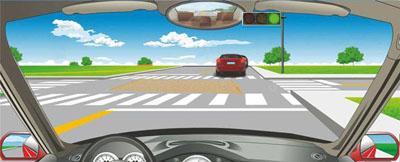
A. Wait in the cross-hatched marking area
B. stop and wait outside the intersection
C. Follow the vehicle in front and pass
D. Wait inside the intersection
Answer: B
3. How to reduce speed or stop when driving on a road covered with snow and ice?
A. Take full advantage of driving brake
B. Take full advantage of the control power from engine
C. Take full advantage of parking brake
D. Take full advantage of speed retarder
Answer: B
4. It is not a bad habit for a driver to frequently change lanes.
A. Right
B. Wrong
Answer: B
5. What is the meaning of this sign?

A. No going straight and no changing to left lane
B. No going straight and no left turn
C. Allowed to go straight and change to left lane
D. No going straight and no right turn
Answer: D
6. What is the meaning of this sign?
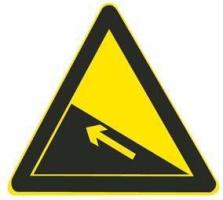
A. Steep downhill road
B. Continuous up slopes
C. Steep uphill road
D. Embankment road
Answer: C
7. What are the hazards of drivers using cellphones or texting while driving?
A. Influencing driving operation
B. Influencing the rest of passengers
C. Failure to respond to emergencies
D. Distracted driving
Answer: ACD
8. Motor vehicle drivers may borrow a special lane for other vehicle types, if one exists, to overtake.
A. Right
B. Wrong
Answer: B
9. What is the meaning of this sign?
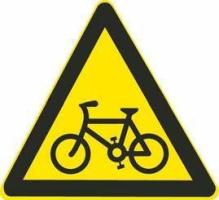
A. The lane for non-motorized vehicles
B. Yield non-motorized vehicles
C. No passing for non-motorized vehicles
D. Watch for non-motorized vehicles
Answer: D
10. When driving on a long downhill road, which is the best way to control the speed?
A. Coast in neutral gear
B. Take a low gear
C. Depress the clutch
D. Pull up the handbrake
Answer: B
11. What should be done by motor vehicle drivers in order to yield politely to such pedestrians?
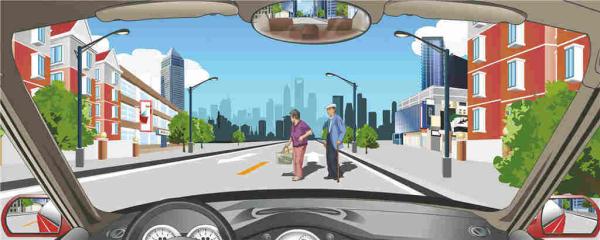
A. Speed up and bypass in front of the pedestrians
B. Speed up and bypass from behind the pedestrians
C. Reduce speed or stop to yield
D. Continuously sound the horn to alert the pedestrians
Answer: C
12. Which of the following acts are prohibited when passing through a tunnel?
A. Overtaking
B. Stopping
C. Making a U-turn
D. Reversing
Answer: ABCD
13. When using emergency brake, be aware of keeping the body of the motorcycle being perpendicular to the ground to avoid sideslip.
A. Right
B. Wrong
Answer: A
14. What is the meaning of this sign?
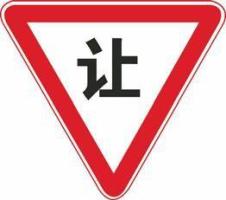
A. No yielding
B. Yield while crossing each other
C. Reduce speed and yield
D. Stop to yield
Answer: C
15. When a motorcycle wades across the water, the braking efficiency of the brake does not change.
A. Right
B. Wrong
Answer: B
16. The drivers, loaders and supercargoes responsible for dangerous chemicals transportation should all full understand the chemical characteristics, potential risks, features of the packaging containers and emergency measures for any unexpected accidents.
A. Right
B. Wrong
Answer: A
17. Under such circumstances, motor vehicle drivers should slow down and yield
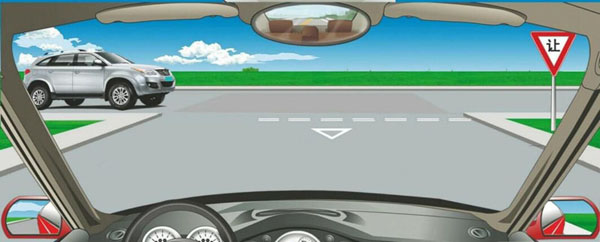
A. Right
B. Wrong
Answer: A
18. When discovering animals crossing the expressway on the highway, the driver should not drastically turn to evade.
A. Right
B. Wrong
Answer: A
19. Turning on the high-beam is an effective way to improve visibility in fog weather.
A. Right
B. Wrong
Answer: B
20. According to regulations, motorcycle driver should wear _______.
A. Glasses
B. A special safety helmet
C. Gloves
D. Safety kneepads
Answer: B