

1. Why is it dangerous to overtake on a snowy mud road in heavy snow?
A. Snow can increase tire adhesion
B. The flying mud made the sight bad.
C. Long braking distance in case of emergency
D. Pavement under snow and mud is easier to skid.
Answer: BCD
2. When such circumstances happen suddenly, what should the driver do?

A. Reduce speed or stop to yield
B. Bypass in front of the pedestrians
C. Continuously sound the horn to alert the pedestrians
D. Bypass from behind the pedestrians
Answer: A
3. In such road sections, you can enter the cross-hatched marking area to wait.
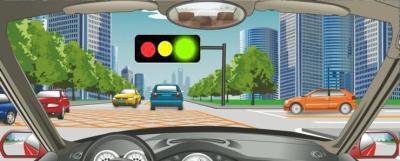
A. Right
B. Wrong
Answer: B
4. When a motor vehicle passes over an overflowing bridge, what should the driver do after stopping and observing closely?
A. Change to a high gear and pass rapidly
B. Constantly observe the changes of the flow
C. Prepare to stop at any time
D. Change to a low gear and pass through at a constant speed
Answer: D
5. When the tire pressure is too low, what can happen when driving at a high speed?
A. Tire pressure will be unstable
B. Tire pressure will increase
C. Driving resistance will decrease
D. The tire will burst
Answer: D
6. The drivers, loaders and supercargoes responsible for dangerous chemicals transportation should all full understand the chemical characteristics, potential risks, features of the packaging containers and emergency measures for any unexpected accidents.
A. Right
B. Wrong
Answer: A
7. When rescuing a wounded person in an emergency, it is necessary to firstly stop the bleeding by compression before other methods are taken according to the conditions of bleeding.
A. Right
B. Wrong
Answer: A
8. When rescuers enter the scene to rescue the wounded after harmful gas leakage caused by traffic accidents, they must wear air respirators or cover their mouth and nose with wet towels.
A. Right
B. Wrong
Answer: A
9. Which of the following is a bad habit when changing lanes?
A. Turning on the indicator in advance
B. Observing closely before changing a lane
C. Change lanes at will
D. Not obstructing the passing of other normally moving vehicles
Answer: C
10. Which one of the following measures is correct when a motor vehicle intends to overtake but the vehicle infront refuses to yield?
A. Use a long-sounding horn
B. Follow the vehicle in front while turning high-beam
C. Wait for it to yield while keeping a safe distance
D. Use high-beam and low-beam alternatively
Answer: C
11. The wrong method to rescue a poisoned person in a traffic accident is to ______.
A. Bring him to a place where air is fresh
B. Take off clothes that are exposed to toxic air
C. Clean exposed areas with clean water
D. Stay in the original place and wait for the rescue personnel
Answer: D
12. What should the driver do when the motor vehicle encounters this situation in front of a school?
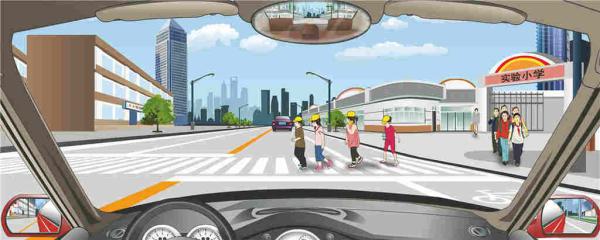
A. Bypass before the queue
B. Slow down and pass slowl
C. Stop promptly and yield
D. Go through in the spaces between the queues
Answer: C
13. When driving on a damp and slippery road, drivers should avoid using the emergency brake to his/her best ability.
A. Right
B. Wrong
Answer: A
14. Keep enough safe distance When a motor vehicle follows another vehicle, because ______.
A. Avoke a rear-end collision
B. The closer you get to the vehicle, the less easy it is to grasp the situation ahead of the vehicle.
C. Enough distance to avoid emergencies
D. Prevent being unable to detect the front vehicle brake in time due to the damage rear lamp of the front vehicle
Answer: ABCD
15. When carrying the wounded persons in coma or in danger of suffocation, they should lie face up.
A. Right
B. Wrong
Answer: B
16. It is extremely unsafe to take a motorcycle by the side; if the motorcycle sideslips, the passenger may be thrown out and led to death due to an unstable center of gravity.
A. Right
B. Wrong
Answer: A
17. When driving on a road covered with ice and snow, the motor vehicle may spin or slide when increasing the speed urgently, due to the loss of vehicle stability.
A. Right
B. Wrong
Answer: A
18. When driving a motor vehicle near an intersection, the vehicle may speed up and honk to pass.
A. Right
B. Wrong
Answer: B
19. Before riding a motorcycle, the driver should wear a safety helmet and adjust the angle of the rearview mirror till he can clearly watch the left side and the right side of the back.
A. Right
B. Wrong
Answer: A
20. When passing a turn or a curve section, the driver should slow down and disengage the clutch.
A. Right
B. Wrong
Answer: B