

1. According to regulations, motorcycle driver should wear _______.
A. Glasses
B. A special safety helmet
C. Gloves
D. Safety kneepads
Answer: B
2. Which of the following measures is incorrect when a motor vehicle stops?
A. Stop at a stipulated place
B. Avoid stopping on pedestrian streets
C. Avoid obstructing the passing of other motor vehicles and pedestrians when temporarily stops on the road
D. Stop on the non-motor vehicle lane
Answer: D
3. When a motor vehicle passes over an inundated road drivers should change to a high gear and pass rapidly.
A. Right
B. Wrong
Answer: B
4. When use the brake of a motorcycle, use the front-wheel brake first, then use the back-wheel brake.
A. Right
B. Wrong
Answer: B
5. Before driving, it is necessary to check whether the cooling liquid, engine oil and fuel oil, are leaking.
A. Right
B. Wrong
Answer: A
6. When following a vehicle on the road, the distance from the vehicle in front is not important. As long as the driver goes forward at the same speed as the vehicle in front does, he/she can avoid a rear-end collision.
A. Right
B. Wrong
Answer: B
7. Whats the meaning of the double white solid lines in far front of the intersection?
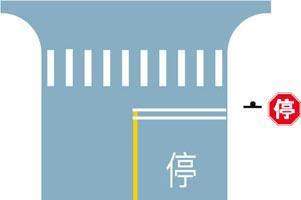
A. Stopping and yield line
B. Slowdown and yield line
C. Left-turn waiting line
D. Waiting to run line
Answer: A
8. Which of the following is a basic requirement for rescuing the injured at the scene of a traffic accident?
A. Treat wounds first and safe life later
B. Save life first and treat wounds later
C. Help lightly wounded persons first
D. Help seriously wounded persons later
Answer: B
9. What is the meaning of this sign?
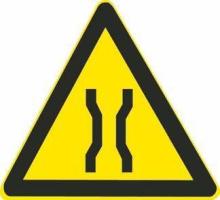
A. Road narrows on the left side
B. Narrow bridge
C. Narrow road
D. Road narrows on the right side
Answer: B
10. What is the meaning of this sign?
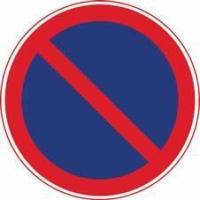
A. No stopping temporarily
B. No long stopping
C. No stopping
D. Long stopping is allowed
Answer: B
11. When a motor vehicle moves through water, drivers should intermittently and gently depress the brake pedal in order to restore braking efficiency.
A. Right
B. Wrong
Answer: A
12. When following other vehicles on a foggy day, what should the driver do?
A. Maintain a large safety distance
B. Turn on the high-beam
C. Turn on the low-bea
D. Sound the horn in due time
Answer: A
13. Speeding up to go though the intersection before the light turns to red in this case.
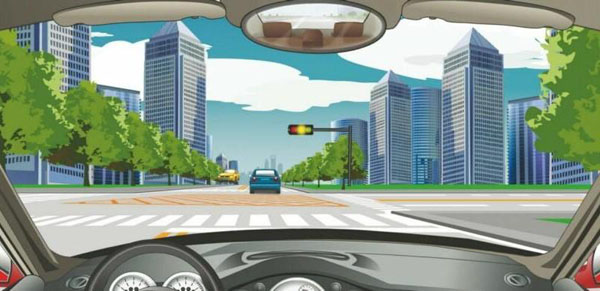
A. Right
B. Wrong
Answer: B
14. What is the meaning of this sign?
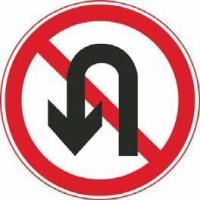
A. No changing lane
B. No left turn
C. No going straight
D. No U turn
Answer: D
15. During normal driving, the driver should do his/her best to run close to or on the central line so as not to allow oncoming vehicles any opportunity to occupy his own route.
A. Right
B. Wrong
Answer: B
16. What is the meaning of this sign?
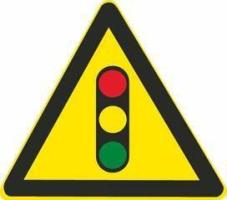
A. Crosswalk lights
B. Watch for pedestrians
C. Attention to traffic lights
D. Intersection
Answer: C
17. How should a motor vehicle follow the other vehicle In front when driving on a road covered with ice and snow?
A. Keep a long safe distance
B. Turn on hazard lamp
C. Change between high-and-low beam alternatively
D. Sound the horn in due time to give a notice to the vehicle in front
Answer: A
18. When a vehicle encounters a strong side wind in a mountain valley, the driver should drastically turn the steering handlebar to adjust the direction of the vehicle if he feels the vehicle deviates from the normal direction.
A. Right
B. Wrong
Answer: B
19. When a motorcycle passing through an interchange discovers it has chosen a wrong route, it should immediately make a U turn from where it is or reverse to change route.
A. Right
B. Wrong
Answer: B
20. Which measures is correct when a motor vehicle intends to overtake
A. After overtaking, turn on the right turning light and drive back to the original lane after the necessary safe distance has been pulled away by overtaking.
B. Overtaking from the left side of the previous car
C. After overtaking, turn on the right turn light and drive back to the original Lane immediately.
D. Overtake on the right side
Answer: AB