

1. Which one of the following measures is correct when a motor vehicle intends to overtake but the vehicle infront refuses to yield?
A. Use a long-sounding horn
B. Follow the vehicle in front while turning high-beam
C. Wait for it to yield while keeping a safe distance
D. Use high-beam and low-beam alternatively
Answer: C
2. The motorized vehicle driver may go through an intersection rapidly when there is no traffic signal
A. Right
B. Wrong
Answer: B
3. Which of the following measures is correct for rescuing a person sustaining full-body burns?
A. Cover the fire with sandy soil
B. Spray cool water to his body
C. Put out the fire by extinguisher
D. Help to remove the burning clothes
Answer: B
4. When driving in a heavy rain, drivers should contro their speed to prevent their vehicles from sliding.
A. Right
B. Wrong
Answer: A
5. How to follow a motor vehicle safely on the road?
A. Observe the front vehicle conditions
B. Drive on the left side of the road as far as possible
C. Be ready to slow down at any time
D. Keep a safe distance
Answer: ACD
6. Whats the meaning of the white horizontal solid line in the circle?

A. Turning waiting line
B. Deceleration line
C. Yielding line
D. Stop line
Answer: D
7. What is the meaning of this sign?

A. Watch for pedestrians
B. Watch for children
C. School area
D. Crosswalk
Answer: A
8. When rescuing a wounded person in coma, it is necessary to take warm-keeping measures to prevent heat loss.
A. Right
B. Wrong
Answer: A
9. What is the meaning of this sign?
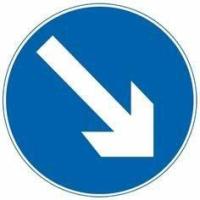
A. Downhill section on right side
B. Driving by the right side of the road
C. Stopping by the right side of the road
D. Right turn only
Answer: B
10. How to drive a car safely when the sight of rain, snow, fog is not clear or the road is slippery?
A. Increase the horizontal distance
B. Reduce speed and run
C. Speed up and run
D. Stop to yield when necessary
Answer: ABD
11. When finding a tire burst on the road, the driver should gently depress the brake pedal, reduce speed and stop the vehicle slowly.
A. Right
B. Wrong
Answer: A
12. What is the meaning of this sign?
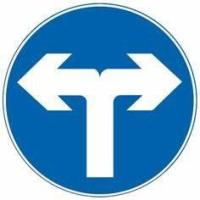
A. No left turn
B. Leftt and right turn
C. No leftt and right turn
D. No right turn
Answer: B
13. Which will affect the stopping distance?
A. Pavement conditions
B. Driver’s reaction time
C. The quantity of cargo and the structure of brake, etc.
D. The vehicle speed
Answer: ABCD
14. Whats the meaning of the double white broken lines in far front of the intersection?
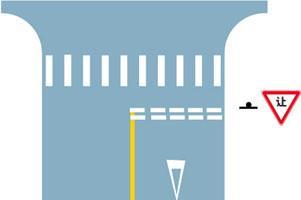
A. Waiting to run line
B. Stopping and yield line
C. Slowdown and yield line
D. Left-turn waiting line
Answer: C
15. What are the main reasons why driving a motor vehicle should not overtake on rainy days?
A. It is not easy for drivers around to see the overtaking signal.
B. Can not accurately judge the distance of vehicles around
C. Road is wet and slippery, and vehicles are prone to sideslip
D. The driver can not detect dangerous in time
Answer: ABCD
16. What is the meaning of this sign?
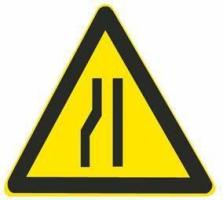
A. Road narrows on both sides
B. Road narrows on the right side
C. Road narrows on the left side
D. Bridge narrows
Answer: C
17. When seeing this sign, the driver should reduce speed and observe the road conditions.

A. Right
B. Wrong
Answer: A
18. Before driving, it is necessary to check whether the cooling liquid, engine oil and fuel oil, are leaking.
A. Right
B. Wrong
Answer: A
19. When a motorcycle braking on a road covered by ice and snow, the driver should adopt point braking and prepare their feet for landing when braking.
A. Right
B. Wrong
Answer: A
20. When a fast-running vehicle makes a sharp turn, it can very easily cause side collision or an overturn due to the centrifugal force.
A. Right
B. Wrong
Answer: A