

1. Keep enough safe distance When a motor vehicle follows another vehicle, because ______.
A. Avoke a rear-end collision
B. The closer you get to the vehicle, the less easy it is to grasp the situation ahead of the vehicle.
C. Enough distance to avoid emergencies
D. Prevent being unable to detect the front vehicle brake in time due to the damage rear lamp of the front vehicle
Answer: ABCD
2. When approaching a sharp curve, motor vehicle drivers should reduce speed only after entering the curve.
A. Right
B. Wrong
Answer: B
3. When a motorcycle goes down a long slope, it should run at a lower gear and fully use the engine to brake.
A. Right
B. Wrong
Answer: A
4. What should the driver pay attention to when the motor vehicle passes a residential area?
A. Observe the traffic signs and markings
B. Pass slowly
C. Prohibited from sounding the horn
D. Avoidance of residents
Answer: ABCD
5. What is the meaning of this sign?
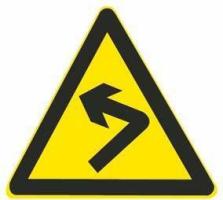
A. Bypass from left side
B. Continuous curves
C. Sharp left curve
D. Sharp right curve
Answer: C
6. According to regulations, motorcycle driver and passenger should wear helmets.
A. Right
B. Wrong
Answer: A
7. A light motorcycle is only permitted to carry preschoolers.
A. Right
B. Wrong
Answer: B
8. When rescuing a wounded person who has been poisoned by toxic gas, the first measure is to send him to a place where air is fresh so that he will not continue to be poisoned.
A. Right
B. Wrong
Answer: A
9. Which of the following can effectively avoid driving fatigue
A. Take a proper rest after dinner before driving.
B. Driving continuously for no more than 4 hours
C. Keep a Good Sleep
D. Do npt eat too much
Answer: ABCD
10. When passing an intersection, vehicle motor drivers are not allowed to overtake.
A. Right
B. Wrong
Answer: A
11. When the tire pressure is too low, what can happen when driving at a high speed?
A. Tire pressure will be unstable
B. Tire pressure will increase
C. Driving resistance will decrease
D. The tire will burst
Answer: D
12. How to follow a motor vehicle safely on the road?
A. Observe the front vehicle conditions
B. Drive on the left side of the road as far as possible
C. Be ready to slow down at any time
D. Keep a safe distance
Answer: ACD
13. When encountering such pedestrians, motor vehicle drivers may continuously sound the horn to alert them to yield.
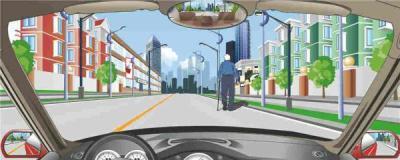
A. Right
B. Wrong
Answer: B
14. What marking is the road mark?

A. Crosswalk ahead
B. Intersection ahead
C. Reduce speed and yield ahead
D. Stop to yield ahead
Answer: A
15. When driving on a rough road, the driver should use low gear to keep low speed; try to choose roads with big pits to reduce bumpy feeling.
A. Right
B. Wrong
Answer: B
16. When driving a motor vehicle, the driver encounter pedestrians who are focused on using mobile phones, what should the driver do?
A. Drive with care
B. Observe the movement of pedestrians
C. Be ready to stop
D. Swiftly bypass from one side
Answer: ABC
17. When following a vehicle on the road, the distance from the vehicle in front is not important. As long as the driver goes forward at the same speed as the vehicle in front does, he/she can avoid a rear-end collision.
A. Right
B. Wrong
Answer: B
18. Drivers should wear shoes or boots, which have heels and not skid soles, to ensure the acute, accurate, and reliable gear-shifting by feet.
A. Right
B. Wrong
Answer: A
19. What are the hazards of drivers using cellphones or texting while driving?
A. Influencing driving operation
B. Influencing the rest of passengers
C. Failure to respond to emergencies
D. Distracted driving
Answer: ACD
20. When driving on a muddy roads, it is easy for wheels to sideslip or skid, which leads to traffic accidents.
A. Right
B. Wrong
Answer: A