

1. What is the meaning of this sign?

A. Muddy road
B. Low-lying road
C. Overflowing road
D. Ferry
Answer: C
2. What is the meaning of this sign?

A. Turn left
B. No going straight
C. Straight-going lane
D. One-way road
Answer: A
3. When the driver discovers a tire is leaking and steers the vehicle off the main carriageway, he should refrain from applying emergency so as to avoid a vehicle turnover or a rear-end collision arising from the late braking of the following vehicle.
A. Right
B. Wrong
Answer: A
4. What is the meaning of this sign?
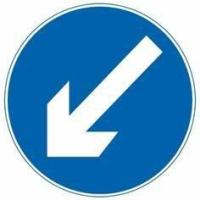
A. Stop by the left side of the road
B. Downhill section left
C. Left turn only
D. Run by the left side of the road
Answer: D
5. When driving in a strong wind, drivers should abruptly turn the steering wheel to return to the original direction if they feel the vehicle deviates horizontally due to a strong gale.
A. Right
B. Wrong
Answer: B
6. Which will affect the stopping distance?
A. Pavement conditions
B. Driver’s reaction time
C. The quantity of cargo and the structure of brake, etc.
D. The vehicle speed
Answer: ABCD
7. What should be done by the driver who intends to overtake but the motor vehicle in front neither reduces its speed nor allows the right of way?
A. Continuously sounding the horn and accelerating to overtake
B. Accelerating and continuing to overtake
C. Refraining from overtaking
D. Following the vehicle in front closely and finding a chance to overtake
Answer: C
8. When a motorcycle reaches a muddy or burst-and-muddy section, the driver should stop, observe and select the level and solid section or the section with vehicle tracks.
A. Right
B. Wrong
Answer: A
9. When approaching a sharp curve, motor vehicle drivers should reduce speed only after entering the curve.
A. Right
B. Wrong
Answer: B
10. What are the driving behaviors that cause accidents when a motor vehicle turns to a turning road?
A. Vehicles occupy opposite lanes
B. Turn the steering wheel sharply in the bend
C. Do not slow down before turning
D. Motor vehicles drive on the right side of the road
Answer: ABC
11. What is the meaning of this sign?
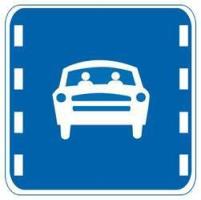
A. Special lane for small vehicles
B. Special lane for motorized vehicles
C. Special lane for taxis
D. Special lane for multi-passenger vehicles
Answer: D
12. When the tire pressure is too low, what can happen when driving at a high speed?
A. Tire pressure will be unstable
B. Tire pressure will increase
C. Driving resistance will decrease
D. The tire will burst
Answer: D
13. Why is it dangerous to overtake on a snowy mud road in heavy snow?
A. Snow can increase tire adhesion
B. The flying mud made the sight bad.
C. Long braking distance in case of emergency
D. Pavement under snow and mud is easier to skid.
Answer: BCD
14. When such circumstances happen suddenly, drivers should reduce speed in a timely fashion or stop to yield.

A. Right
B. Wrong
Answer: A
15. When carrying the wounded persons in coma or in danger of suffocation, they should lie face up.
A. Right
B. Wrong
Answer: B
16. What should the driver do when the motor vehicle counters this situation?
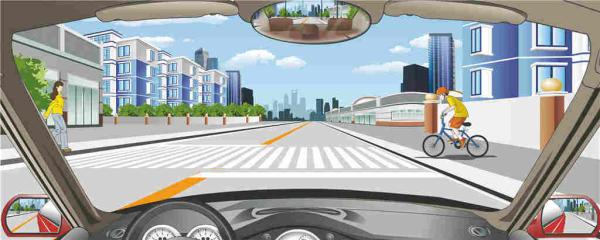
A. Sound the horn continuously to warn
B. Speed up and bypass from the front
C. Slow down when encountering any risks
D. Slow down voluntarily and yield
Answer: D
17. Under such circumstances, motor vehicle drivers should stop and yield
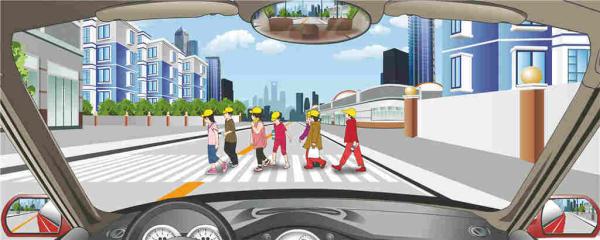
A. Right
B. Wrong
Answer: A
18. When passing through a tunnel, the wrong measure is to ___________.
A. Keep safe distance when two vehicles cross each other
B. Driving with the low beam light
C. Use the hight beam light when two vehicles cross each other
D. Overtaking in the tunnel
Answer: CD
19. What is the meaning of this sign?
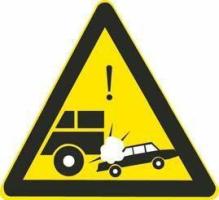
A. Accident-prone section
B. Construction section
C. Reducing speed and going slowly section
D. Jammed section
Answer: A
20. When driving on a rough road, the driver should use low gear to keep low speed; try to choose roads with big pits to reduce bumpy feeling.
A. Right
B. Wrong
Answer: B