

1. When the driver discovers a tire is leaking and steers the vehicle off the main carriageway, he should refrain from applying emergency so as to avoid a vehicle turnover or a rear-end collision arising from the late braking of the following vehicle.
A. Right
B. Wrong
Answer: A
2. How will the adhesive force of road change when speed increases on a damp and slippery road?
A. Increase sharply
B. Increase gradually
C. Decrease sharply
D. No change
Answer: C
3. What is the meaning of this sign?

A. Watch for pedestrians
B. Watch for children
C. School area
D. Crosswalk
Answer: A
4. What is the meaning of this sign?
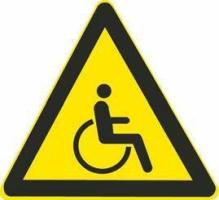
A. Exit and entry for disabled people
B. Watch for disabled people
C. Rest area for disabled people
D. Special passage for disabled people
Answer: B
5. What is the meaning of this sign?
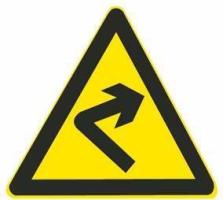
A. Sharp right curve
B. Bypass from right side
C. Continuous curves
D. Sharp left curve
Answer: A
6. When the wounded person is suffering main artery bleeding, where should the rescue personnel press by thumb to stop the bleeding?
A. The artery near the heart
B. The artery lower to the wound
C. The artery further from the heart
D. The artery in the center of the wound
Answer: A
7. There is a risk of overtaking when driving a motor vehicle approaches the top of the slope on a mountainous road, because _____.
A. When approaching the top of the slope, the line of sight is blocked and it is impossible to observe the traffic situation.
B. When approaching the top of the slope, the line of sight is blocked. It is impossible to observe whether there are obstacles behind the top of the slope.
C. The speed is slower when approaching the top of the slope.
D. When approaching the top of the slope, the line of sight is blocked and the road direction behind the top of the slope can not be observed.
Answer: ABD
8. When parking temporarily on a snowy day, drivers should turn on the headlamp and fog lamp.
A. Right
B. Wrong
Answer: B
9. What is the meaning of this sign?
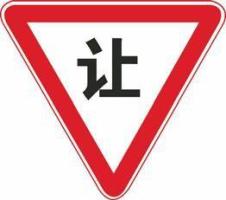
A. No yielding
B. Yield while crossing each other
C. Reduce speed and yield
D. Stop to yield
Answer: C
10. Having driven his vehicle at 110km/hour on an urban road, Mr. Lin is trying to leave the scene after a rear-end collision but is held back by bystanders. The alcohol concentration in his blood, tested in an alcohol test by the traffic police, is 135.8mg per hundred milliliters. Which of the following law-breaking acts did Mr. Lin commit?
A. Drunk driving
B. Speeding
C. Fatigued driving
D. Hit-and-run driving
Answer: ABD
11. When driving in a strong wind, drivers should abruptly turn the steering wheel to return to the original direction if they feel the vehicle deviates horizontally due to a strong gale.
A. Right
B. Wrong
Answer: B
12. What are the main reason for slow driving of motorized vehicles on rainy days?
A. Braking distance will increase
B. The driver’s view is limited
C. Emergency braking can easily cause side skidding
D. Fast driving increases fuel consumption
Answer: ABC
13. What should the driver do when the motor vehicle counters this situation?
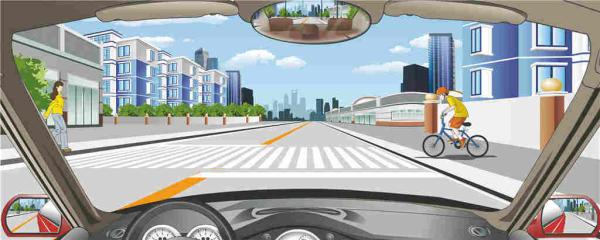
A. Sound the horn continuously to warn
B. Speed up and bypass from the front
C. Slow down when encountering any risks
D. Slow down voluntarily and yield
Answer: D
14. In such road sections, you can enter the cross-hatched marking area to wait.
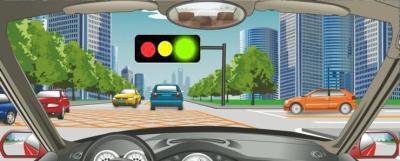
A. Right
B. Wrong
Answer: B
15. When rescuing the persons who are losing blood, it is necessary to ______ first.
A. Observe
B. Dress the wounds
C. Stop bleeding
D. Inquire
Answer: C
16. Sounding the horn on a foggy daY can arouse the attention of the opposite side. After hearing the horn from the opposite side, the driver should also sound their own horn to respond.
A. Right
B. Wrong
Answer: A
17. Speed up and pass when encountering this traffic light at the intersection
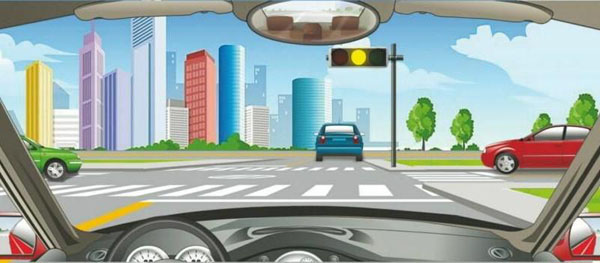
A. Right
B. Wrong
Answer: B
18. The main impact of muddy roads on safe driving is that the wheels may easily spin and skid
A. Right
B. Wrong
Answer: A
19. What is the meaning of this sign?
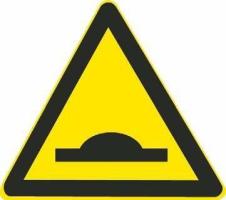
A. Bump road
B. High outburst road
C. Low-lying road
D. Hump bridge
Answer: B
20. What is the meaning of this sign?

A. No going straight and no changing to left lane
B. No going straight and no left turn
C. Allowed to go straight and change to left lane
D. No going straight and no right turn
Answer: D