

1. When a motorcycle passing through an interchange discovers it has chosen a wrong route, it should immediately make a U turn from where it is or reverse to change route.
A. Right
B. Wrong
Answer: B
2. When seeing this sign, the driver should reduce speed and observe the road conditions.

A. Right
B. Wrong
Answer: A
3. What is the meaning of this sign?
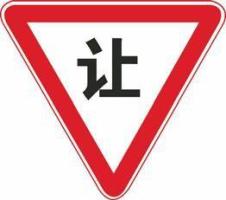
A. No yielding
B. Yield while crossing each other
C. Reduce speed and yield
D. Stop to yield
Answer: C
4. When the driver discovers a tire is leaking and steers the vehicle off the main carriageway, he should refrain from applying emergency so as to avoid a vehicle turnover or a rear-end collision arising from the late braking of the following vehicle.
A. Right
B. Wrong
Answer: A
5. When encountering an obstacle on one side of the road, what should vehicles do as they approach each other?
A. The vehicle not encountering an obstacle should Yield to the other vehicle
B. The slower vehicle should yield to the faster
C. The vehicle encountering an obstacle should yield to the other vehicle
D. The faster vehicle should yield to the slower
Answer: C
6. According to regulations, motorcycle driver and passenger should wear helmets.
A. Right
B. Wrong
Answer: A
7. Motor vehicle drivers may make a U-turn in this area as long as it will not affect the passing of pedestrians.
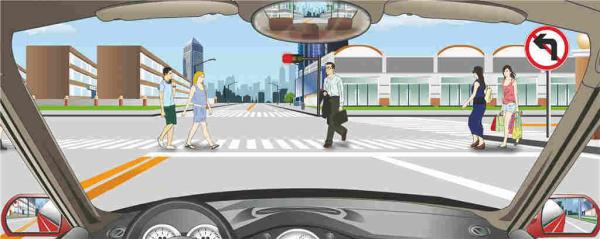
A. Right
B. Wrong
Answer: B
8. What is the meaning of this sign?
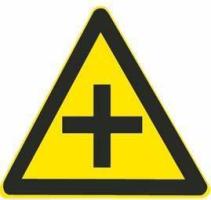
A. Intersection
B. Ring intersection
C. T-shaped intersection
D. Y-shaped intersection
Answer: A
9. When driving on a long downhill road, which is the best way to control driving speed?
A. Coast in neutral gear
B. Depress the clutch and coast
C. Use the engine to brake
D. Depress the brake pedal continuously
Answer: C
10. Driving and smoking has no negative effect on safe driving
A. Right
B. Wrong
Answer: B
11. What is the meaning of this sign?
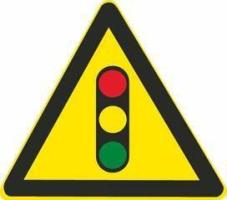
A. Crosswalk lights
B. Watch for pedestrians
C. Attention to traffic lights
D. Intersection
Answer: C
12. What are the driving behaviors that cause accidents when a motor vehicle turns to a turning road?
A. Vehicles occupy opposite lanes
B. Turn the steering wheel sharply in the bend
C. Do not slow down before turning
D. Motor vehicles drive on the right side of the road
Answer: ABC
13. What should the driver do if he/she encounters pedestrians in this situation at an intersection?
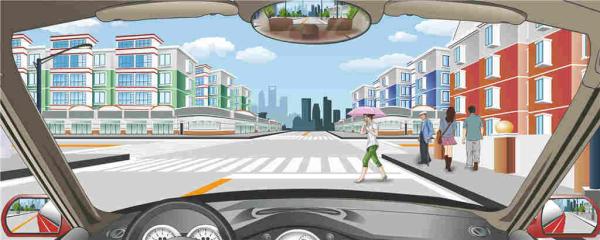
A. Slow down promptly and stop to yield
B. Sound the horn to warn the pedestrians to yield
C. Speed up and pass in front of the pedestrians
D. Turn on the headlamps to warn the pedestrians to yield
Answer: A
14. When following other vehicles on the uphill section of a mountain road, what should the driver do if the vehicle in front stops?
A. Overtake from either side of the front vehicle
B. Stop close to the vehicle in front
C. Stop with a larger space from the vehicle in front
D. Sound the horn continuously to warn the other driver
Answer: C
15. What is the meaning of this sign?

A. Passing by the right side
B. Passing by the left side
C. Running to right side
D. Running the roundabout
Answer: D
16. Motor vehicle drivers don’t need to use any lamp at night when passing through a road section where the street light condition is good.
A. Right
B. Wrong
Answer: B
17. When using splints, sticks or tree branches to keep the unexposed bones in position, it is necessary that these things should exceed the upper and lower joints of the wound.
A. Right
B. Wrong
Answer: A
18. When driving a motor vehicle crosses each other on a hump bridge, what should the driver do?
A. Rush to pass
B. Reduce speed
C. Honk to indicate the vehicle
D. Go on the right side
Answer: BCD
19. Before driving, it is necessary to check whether the cooling liquid, engine oil and fuel oil, are leaking.
A. Right
B. Wrong
Answer: A
20. When driving on a road covered with ice and snow drivers should not use the emergency brake but can apply a sharp turn.
A. Right
B. Wrong
Answer: B