

1. Whats the meaning of this sign?
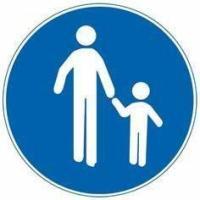
A. Pass with low speed
B. Watch for pedestrians
C. On foot
D. Pedestrians go first
Answer: C
2. When encountering this situation at the gate of a school, the driver should prepare to stop.
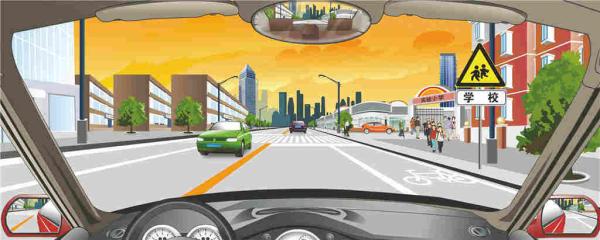
A. Right
B. Wrong
Answer: A
3. Violent wind can cause a sideways swerve to a running vehicle.
A. Right
B. Wrong
Answer: A
4. Motor vehicle drivers don’t need to use any lamp at night when passing through a road section where the street light condition is good.
A. Right
B. Wrong
Answer: B
5. When rescuing a wounded person suffering from bone fracture, which of the following should be kept in mind?
A. Immediately send him/her to the hospital on a stretcher
B. Properly change the original posture when the injured person wounded
C. Dress the fracture with a bandage
D. Do not move the fractured body-part
Answer: D
6. A light motorcycle is only permitted to carry preschoolers.
A. Right
B. Wrong
Answer: B
7. When a wounded person is under the wheel or cargo, the wrong method is to pull the limbs of the wounded.
A. Right
B. Wrong
Answer: B
8. After setting off from a roadside, motor vehicle drivers should watch both sides of the road, turn left and drive into the normal lane slowly.
A. Right
B. Wrong
Answer: A
9. How to drive a car safely when the sight of rain, snow, fog is not clear or the road is slippery?
A. Increase the horizontal distance
B. Reduce speed and run
C. Speed up and run
D. Stop to yield when necessary
Answer: ABD
10. How should lamps be used when motor vehicle drivers pass through a two-way tunnel?
A. Turn on the hazard lamps
B. Turn on the high-beam
C. Turn on the fog lamp
D. Turn on the low-beam
Answer: D
11. What is the meaning of this sign?
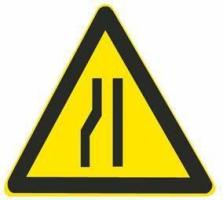
A. Road narrows on both sides
B. Road narrows on the right side
C. Road narrows on the left side
D. Bridge narrows
Answer: C
12. When encountering an obstacle on one side of the road, what should vehicles do as they approach each other?
A. The vehicle not encountering an obstacle should Yield to the other vehicle
B. The slower vehicle should yield to the faster
C. The vehicle encountering an obstacle should yield to the other vehicle
D. The faster vehicle should yield to the slower
Answer: C
13. What should be done by the driver who intends to overtake but finds that the vehicle in front is also overtaking?
A. Following the vehicle in front closely and finding a chance to overtake it
B. Accelerating to overtake forcefully
C. Continuously sounding the horn to urge the vehicle in front to yield
D. Refraining from overtaking and letting the vehicle in front overtake first
Answer: D
14. When driving on a foggy day, the driver should turn on the fog lamp.
A. Right
B. Wrong
Answer: A
15. What is the meaning of this sign?
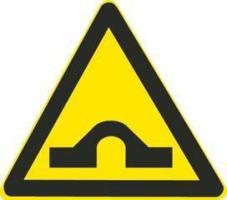
A. Hump bridge
B. High outburst road
C. Low-lying road
D. Bump road
Answer: A
16. How to follow a motor vehicle safely on the road?
A. Observe the front vehicle conditions
B. Drive on the left side of the road as far as possible
C. Be ready to slow down at any time
D. Keep a safe distance
Answer: ACD
17. What matters need attention when driving on a rainy day?
A. Avoid using the emergency brake or making sharp turns
B. Keep a safe enough distance
C. Observe the traffic situation of non-motor vehicles and surrounding pedestrians
D. Drive at a safe speed
Answer: ABCD
18. When a motor vehicle encounters a burning phenomenon, it should leave the vehicle quickly so as not to cause injury or asphyxia to the respiratory tract.
A. Right
B. Wrong
Answer: A
19. When encountering this situation in a residential area, the driver may honk to urge them to yield.

A. Right
B. Wrong
Answer: B
20. When driving on a damp and slippery road, drivers should avoid using the emergency brake to his/her best ability.
A. Right
B. Wrong
Answer: A