

1、When driving at night on a road that has good lighting, the driver should use _______.
A、The fog light
B、The low beam light
C、The high beam light
D、The hazard lights
Answer:B
2、The cycle for recording the accumulated penalty points for violating road traffic safety regulations is ____________.
A、12 months
B、24 months
C、3 months
D、6 months
Answer:A
3、When encountering school children crossing the road in a queue, the driver should ______.
A、Speed up in advance and pass forcefully
B、Stop to yield
C、Reduce speed and go slowly
D、Continuously honk to urge them
Answer:B
4、This sign indicates running slowly or stopping to let the vehicle on main road go first.
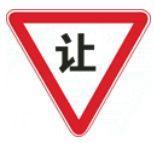
A、Right
B、Wrong
Answer:A
5、When a vehicle goes downhill, it may fully use the neutral gear and slide.
A、Right
B、Wrong
Answer:B
6、The main impact of foggy weather on safe driving is _________.
A、The engine can easily stop
B、The vehicle can easily slide sideways
C、The resistance the vehicle increases
D、The visibility is low and the vision is poor
Answer:D
7、When the road maintenance vehicle and the engineering vehicle are on duty, the passing vehicles should avoid with care.
A、Right
B、Wrong
Answer:A
8、It lights when the handbrake is pulled up.

A、Right
B、Wrong
Answer:A
9、When there is a continuous rain, the shoulders of the mountain roads may become loose and the embankments may collapse. When driving in this weather, the driver should select the middle solid road and refrain from going close to the roadsides.
A、Right
B、Wrong
Answer:A
10、You have the priviledged passing right of way in this situation.
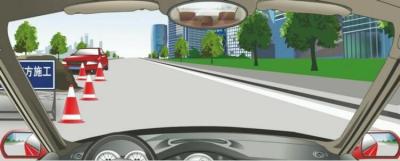
A、Right
B、Wrong
Answer:A
11、When driving a vehicle through an inundated road with non-motorized vehicles on both sides, the driver should _________.
A、Reduce speed and go slowly
B、Go forward normally
C、Speed up and pass
D、Continuously honk
Answer:A
12、When a vehicle approaches an intersection without crosswalk, the driver should _______ if he finds people are crossing the street.
A、Reduce speed or stop to yield
B、Honk to indicate them to yield
C、Immediately change lane and bypass the pedestrians
D、Pass before the pedestrians
Answer:A
13、When encountering stopping in turn or slow-moving vehicles in front at an intersection where lanes are reduced, the motorized vehicle should _________.
A、enter the intersection from road shoulder by the right side of the vehicle in front
B、enter the intersection from the side of interspace
C、pass alternately with one vehicle each lane to enter the intersection
D、change to left lane and cut in to enter the intersection
Answer:C
14、Which is correct when changing lane?
A、turn on the directional signal and turn left quickly
B、reduce speed properly when entering the left lane
C、cannot interfere other vehicles
D、speed up to enter the left lane
Answer:C
15、When encountering an ambulance rushing in the same lane in the opposite direction, the driver should ________.
A、Move to the road side, reduce speed or stop to yield
B、Drive on by using another lane
C、Speed up and change lane to avoid
D、Continue to go in the original lane
Answer:A
16、What pedal is it?
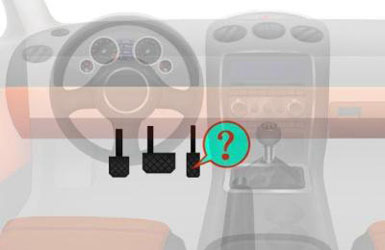
A、accelerator pedal
B、clutch pedal
C、handbrake
D、the brake pedal
Answer:A
17、This sign reminds bump road ahead which may causes bump phenomenon.
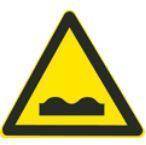
A、Right
B、Wrong
Answer:A
18、What kind of marking are the double yellow solid lines in the middle of the road?

A、auxiliary marking
B、warning sign
C、prohibitive marking
D、indicative marking
Answer:C
19、Whats the meaning of this sign?
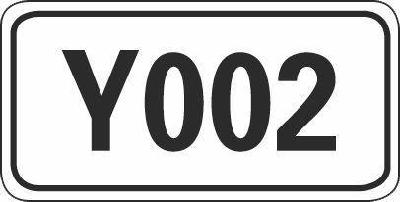
A、provincial highway No.
B、county road No.
C、township road No.
D、national highway No.
Answer:C
20、As the traffic flow at an interchange is generally one-way, the vehicles do not have to reduce speed when passing.
A、Right
B、Wrong
Answer:B