

1. When driving on a long downhill road, which is the best way to control the speed?
A. Coast in neutral gear
B. Take a low gear
C. Depress the clutch
D. Pull up the handbrake
Answer: B
2. When a tire blowout on the road, the driver should control the direction of the vehicle and use emergency braking to bring the motorcycle swiftly to a stop.
A. Right
B. Wrong
Answer: B
3. Once inflammable gas causes a fire disaster, it should be put out with water in good time.
A. Right
B. Wrong
Answer: B
4. When a motorcycle passing through an interchange discovers it has chosen a wrong route, it should immediately make a U turn from where it is or reverse to change route.
A. Right
B. Wrong
Answer: B
5. What should the driver do when he/she encounters an oncoming ambulance in the same lane?
A. Keep to the side and reduce speed or stop to yield
B. Drive ahead by occupying another lane
C. Yield by speeding up and changing lanes
D. Drive ahead in the original lane
Answer: A
6. What should driver do when students crossing the road in line?
A. Speed up and pass in the front of the students
B. Sound the horn to warn the students to yield
C. Slow down and pass
D. Stop and wait until the students pass
Answer: D
7. What is the meaning of this sign?
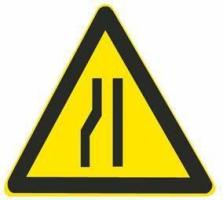
A. Road narrows on both sides
B. Road narrows on the right side
C. Road narrows on the left side
D. Bridge narrows
Answer: C
8. Which lamp should be turned on when motor vehicles pass through a road section at night where the street light condition is good?
A. Front and rear fog lamps
B. Low-beam
C. High-beam
D. Hazard lamp
Answer: B
9. Under such circumstances, motor vehicle drivers should slow down and yield
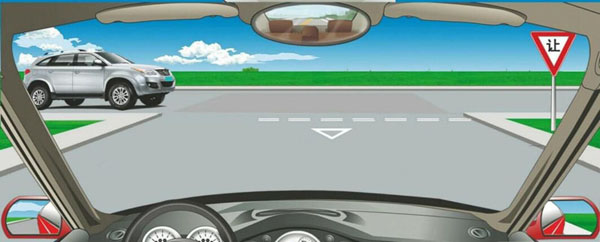
A. Right
B. Wrong
Answer: A
10. When a motorcycle goes down a long slope, it should run at a lower gear and fully use the engine to brake.
A. Right
B. Wrong
Answer: A
11. When such circumstances happen suddenly, what should the driver do?

A. Reduce speed or stop to yield
B. Bypass in front of the pedestrians
C. Continuously sound the horn to alert the pedestrians
D. Bypass from behind the pedestrians
Answer: A
12. when passing an intersection without traffic lights, the driver finds people are crossing the street, the wrong measure for the driver to take is to __________.
A. Reduce speed or stop and yield
B. Honk to urge the pedestrians
C. Bypass
D. Weave through the pedestrians
Answer: BCD
13. Which of the following is a basic requirement for rescuing the injured at the scene of a traffic accident?
A. Treat wounds first and safe life later
B. Save life first and treat wounds later
C. Help lightly wounded persons first
D. Help seriously wounded persons later
Answer: B
14. What is the meaning of this sign?

A. No entering the intersection
B. No right turn
C. No changing lane
D. No U turn
Answer: B
15. When rescuing the persons who are losing blood, it is necessary to ______ first.
A. Observe
B. Dress the wounds
C. Stop bleeding
D. Inquire
Answer: C
16. When driving in thick or extremely thick fog, what should the driver do due to the low visibility in such weather?
A. Turn on the headlamp and drive slowly
B. Turn on the fog lamp and drive slowl
C. Park in a safe place
D. Drive slowly close to the roadside
Answer: C
17. When passing through a tunnel, the wrong measure is to ___________.
A. Keep safe distance when two vehicles cross each other
B. Driving with the low beam light
C. Use the hight beam light when two vehicles cross each other
D. Overtaking in the tunnel
Answer: CD
18. When driving in a strong wind, drivers should abruptly turn the steering wheel to return to the original direction if they feel the vehicle deviates horizontally due to a strong gale.
A. Right
B. Wrong
Answer: B
19. When a motorcycle reaches a muddy or burst-and-muddy section, the driver should stop, observe and select the level and solid section or the section with vehicle tracks.
A. Right
B. Wrong
Answer: A
20. When driving a motor vehicle, the driver encounter pedestrians who are focused on using mobile phones, what should the driver do?
A. Drive with care
B. Observe the movement of pedestrians
C. Be ready to stop
D. Swiftly bypass from one side
Answer: ABC