

1. When driving a motor vehicle into a traffic flow, drivers should not hold up other vehicles.
A. Right
B. Wrong
Answer: A
2. When a motorcycle passing through an interchange discovers it has chosen a wrong route, it should immediately make a U turn from where it is or reverse to change route.
A. Right
B. Wrong
Answer: B
3. When a vehicle encounters a strong side wind in a mountain valley, the driver should drastically turn the steering handlebar to adjust the direction of the vehicle if he feels the vehicle deviates from the normal direction.
A. Right
B. Wrong
Answer: B
4. When the vehicles cross each other at night, what should the driver do if the vehicle coming in the opposite direction don’t turn off the high beam light?
A. Reduce speed for yield or stop on the right side.
B. Continuous change lights to remind the vehicle coming in the opposite direction
C. Turn on the high lights and force the coming car to change the lights
D. Move his sight to the right side to evade the light
Answer: ABC
5. What should the driver pay attention to when the motor vehicle passes a school?
A. Observe the traffic signs and markings
B. Slow down and pass slowly
C. Prohibited from sounding the horn
D. Pass rapidly
Answer: ABC
6. At the scene of a traffic accident, once there is a leakage of toxic and harmful substances, people must be evacuated at the first time and alarmed immediately.
A. Right
B. Wrong
Answer: A
7. When driving a motor vehicle ready to enter a congested roundabout, the wrong measure is to ______.
A. Honk to indicate another vehicle to yield
B. Stop to yield
C. Driving into the congested intersection
D. Drive fast into the intersection
Answer: ACD
8. Dangerous chemicals possess the characteristics of explosion, inflammation, poison, erosion and radiation.
A. Right
B. Wrong
Answer: A
9. What is the meaning of this sign?
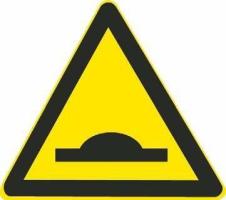
A. Bump road
B. High outburst road
C. Low-lying road
D. Hump bridge
Answer: B
10. What is the most frequent problem for driving on a muddy road?
A. High resistance force
B. Sideways slide
C. The motor vehicle bumps
D. Steering failure
Answer: B
11. Under such circumstances, motor vehicle drivers should bypass on the left quickly.

A. Right
B. Wrong
Answer: B
12. When rescuing a wounded person in an emergency, it is necessary to firstly stop the bleeding by compression before other methods are taken according to the conditions of bleeding.
A. Right
B. Wrong
Answer: A
13. What should motor vehicle drivers do when approaching an oncoming vehicle on a frozen road?
A. Cut speed as approaching each other
B. Pass each other by speeding up properly
C. Pass each other slowly by cutting speed in advance
D. Pass each other along the central line to the best
Answer: C
14. When the driver discovers that steering is stiff, the wrong measure is to ___________.
A. Reduce speed and stop the vehicle as fast as possible
B. Stop at a safe place
C. Continue to drive
D. Identify the cause
Answer: C
15. Serious wave will appear when the front tire blows out; the driver should release the accelerator, firmly hold the steering wheel with both hands, quickly gradually break down, and stop to yield.
A. Right
B. Wrong
Answer: A
16. When rescuing a wounded person who has been poisoned by toxic gas, the first measure is to send him/her to a place with fresh air so that he/she will not continue to be poisoned.
A. Right
B. Wrong
Answer: A
17. When encountering such pedestrians, motor vehicle drivers may continuously sound the horn to alert them to yield.
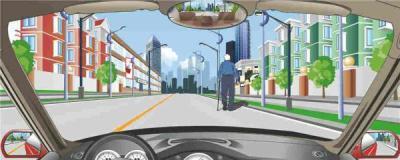
A. Right
B. Wrong
Answer: B
18. Under such circumstances, motor vehicle drivers should slow down and yield
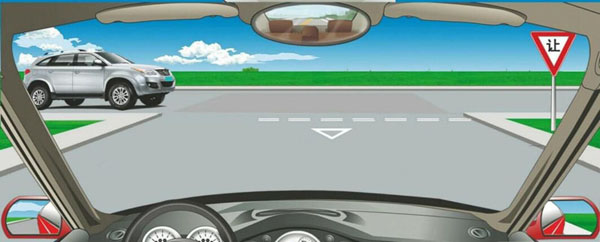
A. Right
B. Wrong
Answer: A
19. When driving in a heavy rain, drivers should contro their speed to prevent their vehicles from sliding.
A. Right
B. Wrong
Answer: A
20. When a motor vehicle stops temporarily in a rainy day,which lamp should be turned on?
A. Front and rear fog lamps
B. Hazard lamps
C. Headlamps
D. Reverse lamps
Answer: B