

1. While driving a motorcycle, it is permitted to keep one hand on the handlebar but not allowed two hands leave handle bars at the same time.
A. Right
B. Wrong
Answer: B
2. When driving on road sections where safe sight distance is affected, such as the top of a ramp, what should drivers do to ensure safety?
A. Rush through
B. Use hazard lamp
C. Cut speed and sound the horn
D. Drive at will
Answer: C
3. It is an illegal act for the driver to make calls while driving.
A. Right
B. Wrong
Answer: A
4. When driving a motor vehicle near an intersection, the vehicle may speed up and honk to pass.
A. Right
B. Wrong
Answer: B
5. What is the meaning of this sign?
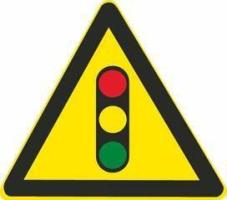
A. Crosswalk lights
B. Watch for pedestrians
C. Attention to traffic lights
D. Intersection
Answer: C
6. When a tire blowout on the road, the driver should control the direction of the vehicle and use emergency braking to bring the vehicle swiftly to a stop.
A. Right
B. Wrong
Answer: B
7. When finding a tire burst on the road, the driver should gently depress the brake pedal, reduce speed and stop the vehicle slowly.
A. Right
B. Wrong
Answer: A
8. When a bicycle borrows the motor vehicle lane, the motor vehicle may sound the horn hurriedly to warn the bicycle to yield.
A. Right
B. Wrong
Answer: B
9. When a motor vehicle stops temporarily in a rainy day,which lamp should be turned on?
A. Front and rear fog lamps
B. Hazard lamps
C. Headlamps
D. Reverse lamps
Answer: B
10. Under such circumstances, motor vehicle drivers should stop and yield
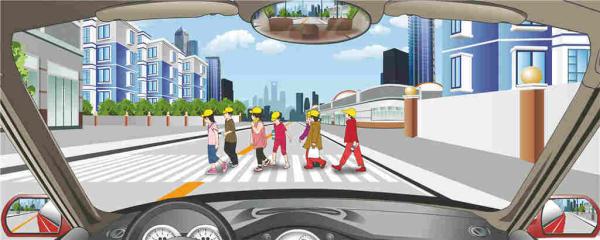
A. Right
B. Wrong
Answer: A
11. The wrong method to rescue a poisoned person in a traffic accident is to ______.
A. Bring him to a place where air is fresh
B. Take off clothes that are exposed to toxic air
C. Clean exposed areas with clean water
D. Stay in the original place and wait for the rescue personnel
Answer: D
12. What is the meaning of this sign?
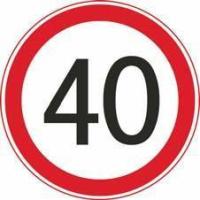
A. Reducing speed 40m ahead
B. Minimum speed is 40km/hr
C. Axle weight limit is 40 tons
D. Maximum speed limit is 40km/hr
Answer: D
13. When driving a motor vehicle into a traffic flow, drivers should not hold up other vehicles.
A. Right
B. Wrong
Answer: A
14. A correct measure to avoid tire burst of motor vehicles is to lower the tire pressure.
A. Right
B. Wrong
Answer: B
15. When a motor vehicle passes over an inundated road drivers should change to a high gear and pass rapidly.
A. Right
B. Wrong
Answer: B
16. When following other vehicles on a foggy day, what should the driver do?
A. Maintain a large safety distance
B. Turn on the high-beam
C. Turn on the low-bea
D. Sound the horn in due time
Answer: A
17. When carrying the wounded persons in coma or in danger of suffocation, they should lie face up.
A. Right
B. Wrong
Answer: B
18. What is the meaning of this sign?
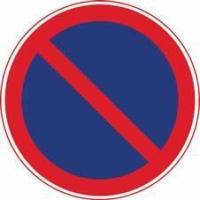
A. No stopping temporarily
B. No long stopping
C. No stopping
D. Long stopping is allowed
Answer: B
19. How to do in this intersection?
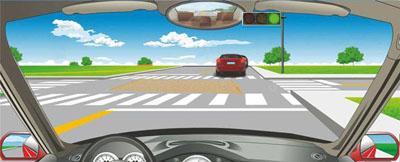
A. Wait in the cross-hatched marking area
B. stop and wait outside the intersection
C. Follow the vehicle in front and pass
D. Wait inside the intersection
Answer: B
20. Drivers who ride motorcycles are able to not wear safety helmets.
A. Right
B. Wrong
Answer: B