

1. The drivers, loaders and supercargoes responsible for dangerous chemicals transportation should all full understand the chemical characteristics, potential risks, features of the packaging containers and emergency measures for any unexpected accidents.
A. Right
B. Wrong
Answer: A
2. What is the meaning of this sign?
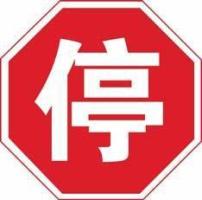
A. Stop to yield
B. No stopping temporarily
C. No entry
D. No long stopping
Answer: A
3. When a bicycle occupies the motor vehicle lane and obstructs the traffic, the driver should sound the horncontinuously and speed up to bypass on the left of the bicycle.
A. Right
B. Wrong
Answer: B
4. Which one of the following measures is correct when a motor vehicle intends to overtake but the vehicle infront refuses to yield?
A. Use a long-sounding horn
B. Follow the vehicle in front while turning high-beam
C. Wait for it to yield while keeping a safe distance
D. Use high-beam and low-beam alternatively
Answer: C
5. It is unsafe to ride a motorcycle by high-heel shoes.
A. Right
B. Wrong
Answer: A
6. It is extremely unsafe to take a motorcycle by the side; if the motorcycle sideslips, the passenger may be thrown out and led to death due to an unstable center of gravity.
A. Right
B. Wrong
Answer: A
7. What are the hazards of drivers using cellphones or texting while driving?
A. Influencing driving operation
B. Influencing the rest of passengers
C. Failure to respond to emergencies
D. Distracted driving
Answer: ACD
8. When the vehicles cross each other at night, what should the driver do if the vehicle coming in the opposite direction don’t turn off the high beam light?
A. Reduce speed for yield or stop on the right side.
B. Continuous change lights to remind the vehicle coming in the opposite direction
C. Turn on the high lights and force the coming car to change the lights
D. Move his sight to the right side to evade the light
Answer: ABC
9. When approaching another vehicle at night, why should the driver alternate between high-and-low-beam at a distance more than 150 meters?
A. Warn each other before passing
B. Driving habit
C. Easy to observe the situation ahead from either side
D. Courtesy
Answer: C
10. What should the driver do if he/she encounters pedestrians in this situation at an intersection?
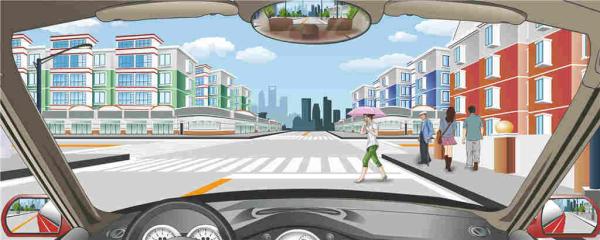
A. Slow down promptly and stop to yield
B. Sound the horn to warn the pedestrians to yield
C. Speed up and pass in front of the pedestrians
D. Turn on the headlamps to warn the pedestrians to yield
Answer: A
11. What is the meaning of this sign?

A. Y-shaped intersection
B. T-shaped intersection
C. Intersection
D. Ring intersection
Answer: B
12. What is the meaning of this sign?
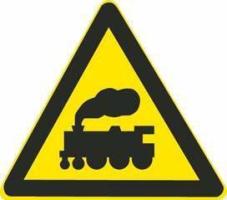
A. Watch for long time honking
B. An unmanned level crossing
C. A manned level crossing
D. Multi-crossing of railway and road
Answer: B
13. When a vehicle approaches an intersection without crosswalk, the driver should _______ if he finds people are crossing the street.
A. Reduce speed or stop to yield
B. Honk to indicate them to yield
C. Pass before the pedestrians
D. Immediately change lane and bypass the pedestrians
Answer: A
14. Whats the meaning of the white horizontal solid line in the circle?

A. Turning waiting line
B. Deceleration line
C. Yielding line
D. Stop line
Answer: D
15. When following a vehicle on the road, the distance from the vehicle in front is not important. As long as the driver goes forward at the same speed as the vehicle in front does, he/she can avoid a rear-end collision.
A. Right
B. Wrong
Answer: B
16. What should motor vehicle drivers do when parking temporarily on a rainy day?
A. Turn on hazard lamp
B. Turn on front and back fog lamp
C. Turn on low-beam
D. Set up warning sign at the back of the vehicle
Answer: A
17. What is the meaning of this sign?

A. Muddy road
B. Low-lying road
C. Overflowing road
D. Ferry
Answer: C
18. What should the motor vehicle driver do when the motor vehicle encounters the crosswalk in thissituation?
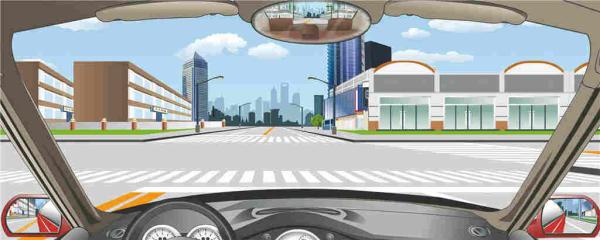
A. Slow down and pass
B. Speed up and pass
C. Sound the horn and pass
D. Stop immediately
Answer: A
19. What should the driver do when the motor vehicle encounters this situation in front of a school?
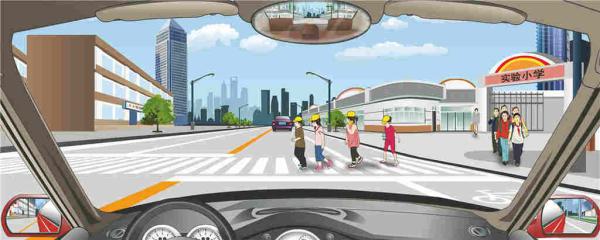
A. Bypass before the queue
B. Slow down and pass slowl
C. Stop promptly and yield
D. Go through in the spaces between the queues
Answer: C
20. In which of the following ways can motor vehicles avoid a tire burst?
A. Lowering tire pressure
B. Checking tires regularly
C. Removing foreign matters from the tire tread grooves timely
D. Replacing the tires that have cracks or deep cuts
Answer: BCD