

1、What should be checked before driving?
A、No parts need to be checked
B、Whether the tires have been cleaned
C、Where the spare tire is placed
D、The fastening and air pressure of tires
Answer:D
2、If a motor vehicle experiences a "water sliding" phenomenon when running on an expressway in rain, what should the driver do?
A、Slow down by suddenly depressing the brake pedal
B、Slow down by slowly releasing the accelerator pedal
C、Turn the steering wheel immediately to adjust the direction
D、Speed up to increase the displacement of the wheels
Answer:B
3、The circle in the center of the intersection indicates that drivers should drive along the inner side when making a small left turn.

A、Right
B、Wrong
Answer:A
4、When the driver discovers a tire is leaking and steers the vehicle off the main driving lane, he/she should refrain from applying emergency braking so as to avoid a vehicle turnover or a rear-end collision arising from the late braking of the vehicle behind.
A、Right
B、Wrong
Answer:A
5、When driving on a damp and slippery road, drivers should avoid using the emergency brake to his/her best ability.
A、Right
B、Wrong
Answer:A
6、When driving on a road covered with ice and snow drivers should not use the emergency brake but can apply a sharp turn.
A、Right
B、Wrong
Answer:B
7、Under this circumstance, motor vehicle drivers should not reduce speed.
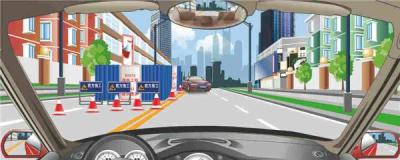
A、Right
B、Wrong
Answer:B
8、The broken white reflective line on the road warns that drivers should drive at a lower speed on the road section ahead.

A、Right
B、Wrong
Answer:A
9、The slanted filled-in yellow marking in the middle of the road warns that there is a stationary obstacle ahead.

A、Right
B、Wrong
Answer:A
10、The driver should drive on the left in this kind of tunnel.

A、Right
B、Wrong
Answer:B
11、When braking, the steering will become impossible if the front wheels are blocked
A、Right
B、Wrong
Answer:A
12、When a motor vehicle on an expressway stops in an emergency due to breakdown or an accident, what should the driver and the passengers do?
A、Stand in front of the motor vehicle
B、Wait in the motor vehicle for rescue
C、Stand behind the motor vehicle
D、Promptly move to the road shoulder on the right side or the emergency lane
Answer:D
13、The sign on the right warns of an abrupt slope section ahead.
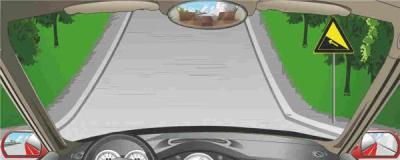
A、Right
B、Wrong
Answer:A
14、When there is no bandage for rescuing a wounded person, which of the following measures is wrong?
A、Dress the wounds with a handkerchief
B、Dress the wounds with a towe
C、Dress the wounds with cotton clothes
D、Dress the wounds with string
Answer:D
15、At 13: 10 pm, Mr Luo set out in his medium bus from 0 km mark on the highway, and by 14: 10 had passed the 125km mark by 200 meters, he caused a rear-end collision with a motor vehicle that ran into the side slope on the southwest side, killing 11 people and injuring 2. Which of the following law-breaking acts did Mr. Luo commit?
A、Speeding
B、Driving not in accordance with traffic markings
C、Exceeding carrying capacity
D、Fatigued driving
Answer:A
16、How to pass the intersection when running straight

A、turn on the hazard lights and pass
B、directly speed up and pass straight
C、yield to the vehicle from the right road
D、yield to the vehicle from the left road
Answer:C
17、Those traffic police signals mean turning right.
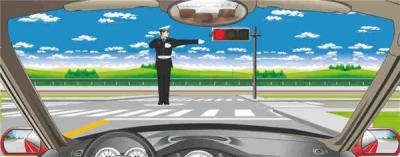
A、Right
B、Wrong
Answer:B
18、The sign on the right warns of a one-way tunnel ahead.
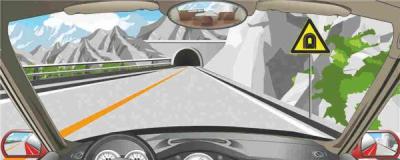
A、Right
B、Wrong
Answer:B
19、The sign in front indicates a one-way lane after turning left.
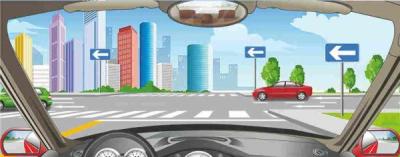
A、Right
B、Wrong
Answer:A
20、When a tire suddenly bursts on the road, in which of the following ways can motor vehicle drivers keep safe?
A、Applying emergency braking and pulling over
B、Firmly holding the steering wheel and keeping the vehicle going straight
C、Immediately releasing the accelerator pedal
D、Gently depressing the brake pedal
Answer:BCD