

1、The sign in front indicates that vehicles except public buses are not allowed to drive in this lane.

A、Right
B、Wrong
Answer:A
2、When extinguishing a fire, the driver should refrain from breathing through mouth or crying loudly Otherwise, the fire and smoke will scorch the upper respiratory tract.
A、Right
B、Wrong
Answer:A
3、This road marker indicates that the minimum speed for this road section is 60 km/hour.
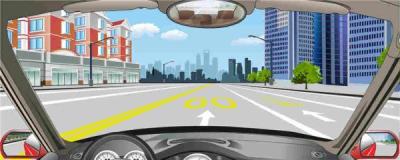
A、Right
B、Wrong
Answer:B
4、When approaching a vehicle on a narrow slope, which one of the following ways is correct?
A、The descending vehicle yields to the ascending
B、The vehicle which is further from the slope crest should yield
C、The ascending vehicle yields to the descending
D、If the descending vehicle has reached the midpoint while the ascending vehicle has not yet set out, the descending vehicle must yield.
Answer:A
5、What should the driver do when seeing these hand signals.

A、Stop and wait
B、Go straight and pass through the intersection
C、Turn right at the intersection
D、Turn left at the intersection
Answer:A
6、Under such circumstances, what should motor vehicle drivers do?
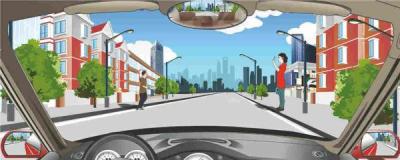
A、Guard against the sideslip of motor vehicles
B、Guard against the crossing of pedestrians
C、Speed up and pass through as quickly as possible
D、Continuously sound the horn
Answer:B
7、Gun powder, explosives and detonating powder belong to which of the following dangerous chemicals?
A、Oxidizing materials
B、Inflammable solid materials
C、Explosives
D、Self-igniting articles
Answer:C
8、When encountering this situation at the gate of a school, the driver should prepare to stop.
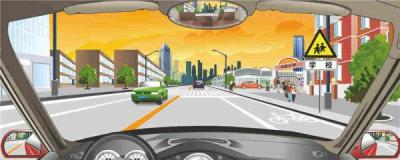
A、Right
B、Wrong
Answer:A
9、When encountering such pedestrians, what should motor vehicle drivers do?
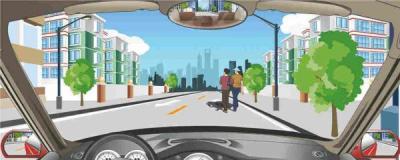
A、Go ahead along the middle line of the road
B、Continuously sound the horn
C、Speed up and overtake
D、Pay attention to the actions of such pedestrians
Answer:D
10、Which of the following is a bad habit when changing lanes?
A、Turning on the indicator in advance
B、Observing closely before changing a lane
C、Change lanes at will
D、Not obstructing the passing of other normally moving vehicles
Answer:C
11、Under such circumstances, what should motor vehicle drivers do?
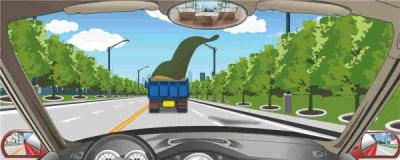
A、Follow the vehicle closely
B、Overtake the vehicle quickly on its left
C、Keep a long braking distance
D、Overtake the vehicle quickly on its right
Answer:C
12、When driving on a muddy road, what should the driver do?
A、Try to avoid using the foot brake
B、Drive slowly in mid or low gear
C、Firmly hold the steering wheel
D、Speed up and pass through
Answer:ABC
13、When a motor vehicle passes over an inundated road what should the driver do?
A、Stop and look at the situation
B、Make sure it's safe and pass over at a low speed
C、Intermittently and gently depress the brake pedal then wading across the water
D、Continuously but gently depress the brake pedal then wading across the water
Answer:ABC
14、Under such circumstances, what should the motor venicle driver do?
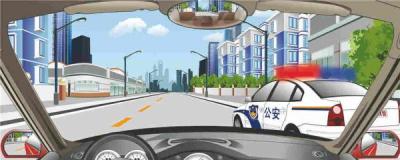
A、Reduce speed and yield by the left side
B、Reduce speed and yield by the right side
C、Speed up and yield by the left side
D、Go ahead along the original route
Answer:A
15、What should the driver do on this kind of curving mountain road?
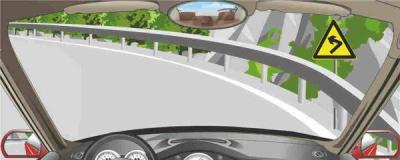
A、Borrow the opposite lane
B、Slow down and drive on the right
C、Stick to the central line of the road
D、Drive close to the right side
Answer:B
16、The marking on the road surface indicates that the speed limit of this road section is 50 km/hour.
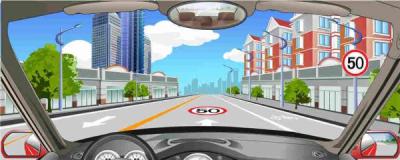
A、Right
B、Wrong
Answer:A
17、The sign on the right warns of a road section ahead under construction.

A、Right
B、Wrong
Answer:A
18、The sign on the left warns of no passing on the right-hand road ahead.
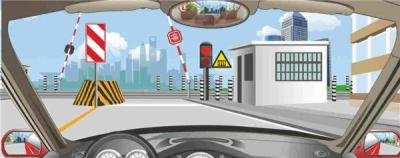
A、Right
B、Wrong
Answer:B
19、The driver should turn left by the left side of the intersection central point.
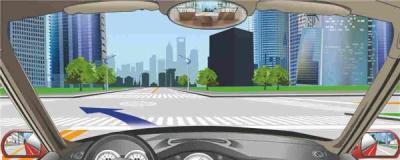
A、Right
B、Wrong
Answer:A
20、When braking, side skid or tail swing may occur if the rear wheels are blocked.
A、Right
B、Wrong
Answer:A