

1、During normal driving, the driver should do his/her best to run close to or on the central line so as not to allow oncoming vehicles any opportunity to occupy his own route.
A、Right
B、Wrong
Answer:B
2、When extinguishing a fire, the driver should refrain from breathing through mouth or crying loudly Otherwise, the fire and smoke will scorch the upper respiratory tract.
A、Right
B、Wrong
Answer:A
3、What's the most frequent problem for driving on a muddy road?
A、High resistance force
B、Sideways slide
C、The motor vehicle bumps
D、Steering failure
Answer:B
4、The braking distance will be shortened greatly when the motor vehicle is equipped with ABS brakes.
A、Right
B、Wrong
Answer:B
5、When driving on an expressway, which of the following statements is correct?
A、Drives are not allowed to drive by riding or rolling on the lane dividing line
B、Drivers are prohibited from driving on road olders
C、Drivers may overtake on the ramp, the acceleration lane or the deceleration lane
D、Drivers are prohibited from learning to drive
Answer:C
6、What should be done by the driver who intends to overtake but the motor vehicle in front neither reduces its speed nor allows the right of way?
A、Continuously sounding the horn and accelerating to overtake
B、Accelerating and continuing to overtake
C、Refraining from overtaking
D、Following the vehicle in front closely and finding a chance to overtake
Answer:C
7、When the motor vehicle encounters a crosswalk in this situation, the driver may speed up and pass rapidly.

A、Right
B、Wrong
Answer:B
8、The guide arrow on the road surface of this lane indicates that only left and right turns are permitted on the lanes ahead.
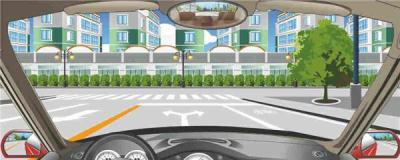
A、Right
B、Wrong
Answer:A
9、Turning on the high-beam is an effective way to improve visibility in fog weather.
A、Right
B、Wrong
Answer:B
10、Drivers are not allowed to cross these lane-dividing lines when overtaking in the same direction.
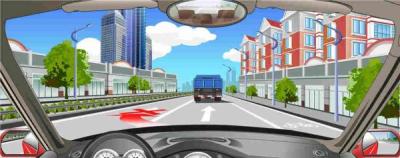
A、Right
B、Wrong
Answer:A
11、After a traffic accident, what is the most effective measure to prevent secondary accidents?
A、Evacuate all passengers
B、Turn on the hazard lamps
C、Mark the original place of the injured persons
D、Properly place the danger warning sign
Answer:ABD
12、Which one of the following is the safest way when driving a motor vehicle on this kind of road surface?
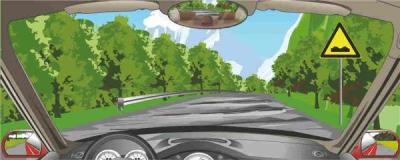
A、Slide over by using neutral gear
B、Pass with a high speed
C、Pass by speeding up
D、Pass with a low speed
Answer:D
13、On a mountain road, what should the driver do in this situation?
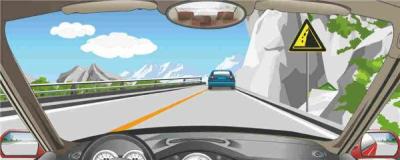
A、Drive on the left and speed up to bypass
B、Stop to observe and pass slowly
C、Observe closely and pass as soon as possible
D、Sound the horn several times and pass slowly
Answer:C
14、When the driver discovers a tire is leaking and steers the vehicle off the main driving lane, he/she should refrain from applying emergency braking so as to avoid a vehicle turnover or a rear-end collision arising from the late braking of the vehicle behind.
A、Right
B、Wrong
Answer:A
15、In this situation, motor vehicles are permitted to stop temporarily at bus stations.
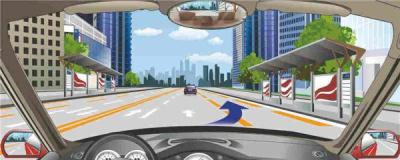
A、Right
B、Wrong
Answer:B
16、When a wounded person suffering bone fracture in the thigh, shank or spine, moving the wounded person is usually prohibited.
A、Right
B、Wrong
Answer:A
17、When encountering such a situation, the vehicles should cut speed or stop to yield as approaching each other.
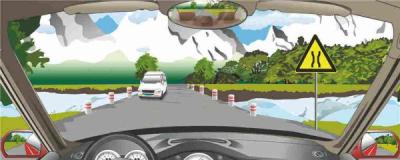
A、Right
B、Wrong
Answer:A
18、Under this circumstance, motor vehicle drivers should give the right of way to oncoming vehicle.

A、Right
B、Wrong
Answer:A
19、Which of the following measures is incorrect when a motor vehicle stops?
A、Stop at a stipulated place
B、Avoid stopping on pedestrian streets
C、Avoid obstructing the passing of other motor vehicles and pedestrians when temporarily stops on the road
D、Stop on the non-motor vehicle lane
Answer:D
20、The cross-hatched marking indicates an area where vehicle drivers are allowed to stop and wait.

A、Right
B、Wrong
Answer:B