

1、The sign on the right indicates to stop and yield for oncoming vehicles approaching on the road ahead.
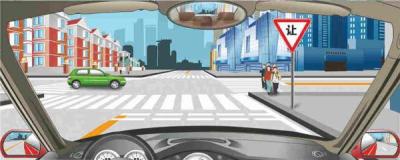
A、Right
B、Wrong
Answer:B
2、How to ensure safe driving at night?
A、Drive at speed limit
B、Cut speed and drive carefully
C、Maintain the current speed
D、Drive above the speed limit
Answer:B
3、How will the adhesive force of road change when speed increases on a damp and slippery road?
A、Increase sharply
B、increase gradually
C、decrease sharply
D、No change
Answer:C
4、What is the intersection ahead indicated by the right sign?
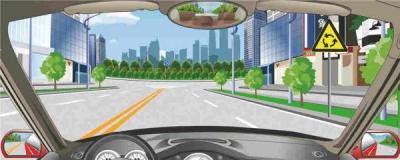
A、T-shaped intersection
B、Y-shaped intersection
C、Cross-shaped intersection
D、Roundabout
Answer:D
5、What should drivers keep in mind when driving on amountainous road?
A、Keep a safe distance
B、Avoid occupancy of another lane when making a turn
C、Downshift in advance when ascending an abrupt slope
D、Taking full advantage of engine braking when descending a long slope
Answer:ABCD
6、The sign in front indicates that vehicles except public buses are not allowed to drive in this lane.

A、Right
B、Wrong
Answer:A
7、Drivers are allowed to cross the broken and solid white line on the road when changing lanes or pulling over.
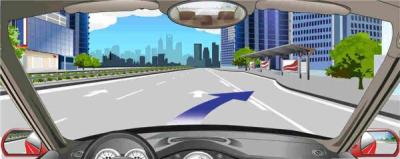
A、Right
B、Wrong
Answer:A
8、The guide arrow on the road surface of this lane indicates that there is an intersection on the right side of the road.
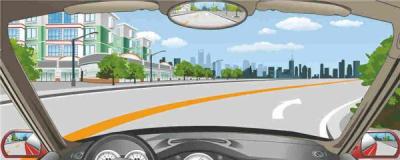
A、Right
B、Wrong
Answer:B
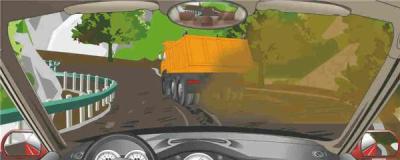
9、When encountering this situation on a mountainous road, motor vehicle drivers should overtake the vehicle in front by speeding up.
A、Right
B、Wrong
Answer:B
10、When there is a braking failure on a downhill road, if there is no other alternative, the driver may rub the vehicle body against the rocks and trees on roadside to force the vehicle to slow down and stop.
A、Right
B、Wrong
Answer:A
11、The sign on the right is an advance announcement of the highway destination.

A、Right
B、Wrong
Answer:B
12、When there is a sudden braking failure on a downhill road, in which ones of the following ways can drivers reduce speed?
A、Driving onto the emergency lane and reduce speed and stop there
B、Rubbing the vehicle body against the rocks or trees on roadside
C、Pulling up the handbrake first
D、Immediately changing to a low gear
Answer:ABD
13、If a motor vehicle experiences a "water sliding" phenomenon when running on an expressway in rain, what should the driver do?
A、Slow down by suddenly depressing the brake pedal
B、Slow down by slowly releasing the accelerator pedal
C、Turn the steering wheel immediately to adjust the direction
D、Speed up to increase the displacement of the wheels
Answer:B
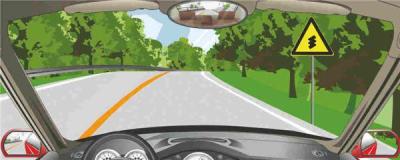
14、The sign on the right warns of right-hand S-shaped bend ahead.
A、Right
B、Wrong
Answer:B
15、What should the driver pay attention to in this situation?
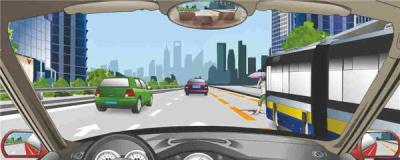
A、Pedestrians passing behind the vehicle
B、Pedestrians passing in front of the vehicle
C、Public buses suddenly reversing
D、Public buses suddenly setting off
Answer:B
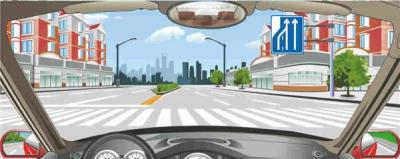
16、The sign on the right indicates that the number of the lanes ahead will increase.
A、Right
B、Wrong
Answer:B
17、Drivers may go straight and pass through when traffic police give these hand signals

A、Right
B、Wrong
Answer:B
18、For evading an emergency on an expressway, which of the following principles should drivers stick to?
A、Evading vehicles first and objects later
B、Evading people first and objects later
C、Evading vehicles first and people later
D、Evading objects first and people later
Answer:B
19、It is illegal to change lanes without turning on indicators.
A、Right
B、Wrong
Answer:A
20、When encountering an obstacle on one side of the road, what should vehicles do as they approach each other?
A、The vehicle not encountering an obstacle should Yield to the other vehicle
B、The slower vehicle should yield to the faster
C、The vehicle encountering an obstacle should yield to the other vehicle
D、The faster vehicle should yield to the slower
Answer:C